Vietnam photoshoot ideas span ao dai traditional shoots, couple sessions in heritage temples, family portraits at golden-hour riverside spots, and pre-wedding series across multiple locations. Cáo Studio – Makeup & Photoshoot in Hanoi and Saigon specializes in tailored sessions for international travelers, with makeup, hair and styling on-site. Season, outfit choice, and location timing determine photo quality more than any other factor.
If you've scrolled through Instagram feeds of travelers in Vietnam—draped in silk ao dai against weathered colonial walls, or laughing under ancient temple eaves—you've seen the lookbook already. But what makes those images work? Light direction. Fabric weight. Where the sun sits at 5:45 p.m. in November. How an undergarment changes the dress silhouette. This guide walks through seven decisions that turn a photo session from "nice memory" into "I show this to everyone."
Ao Dai Photoshoot: Which Style Fits Your Vision?
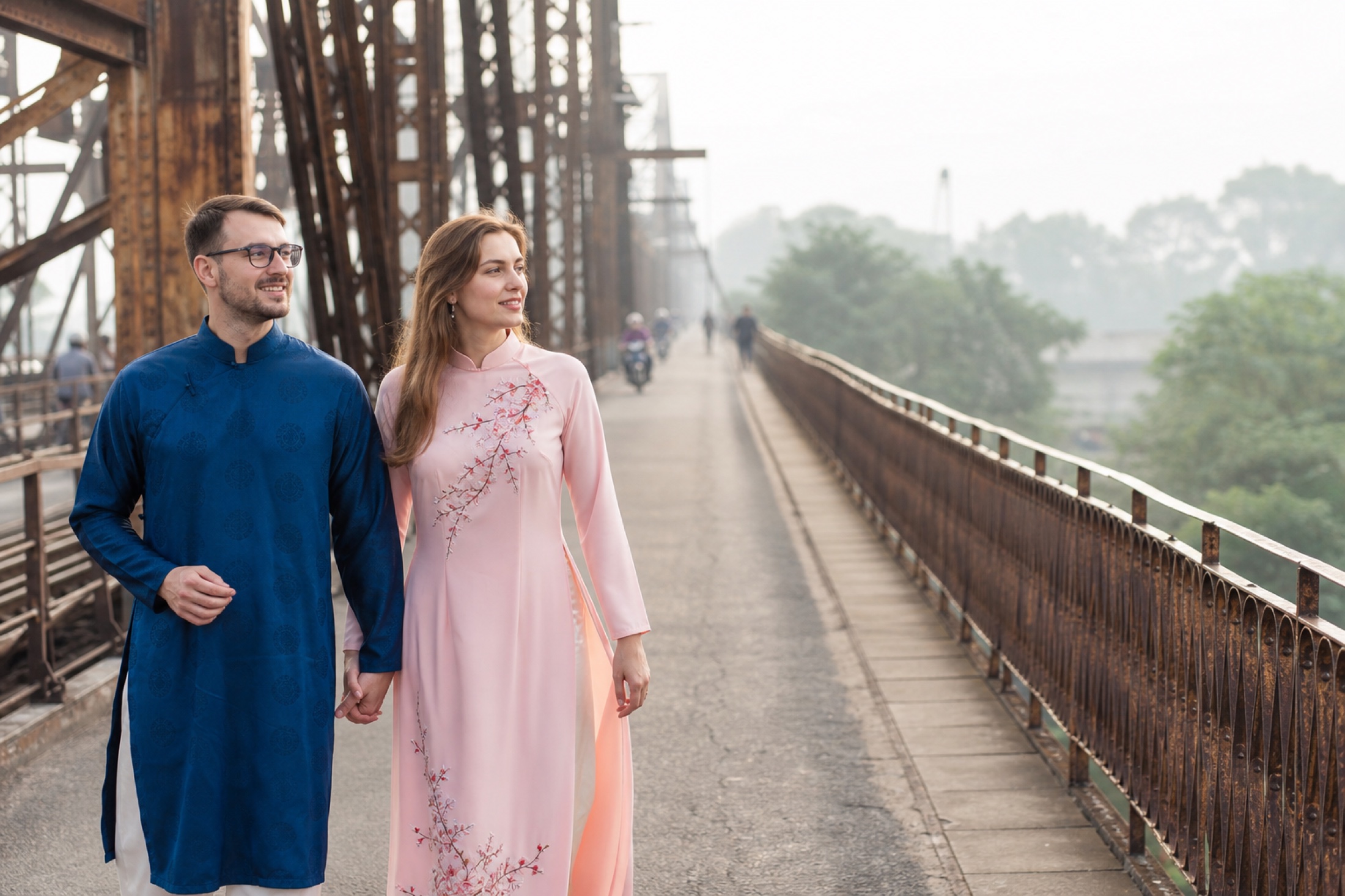
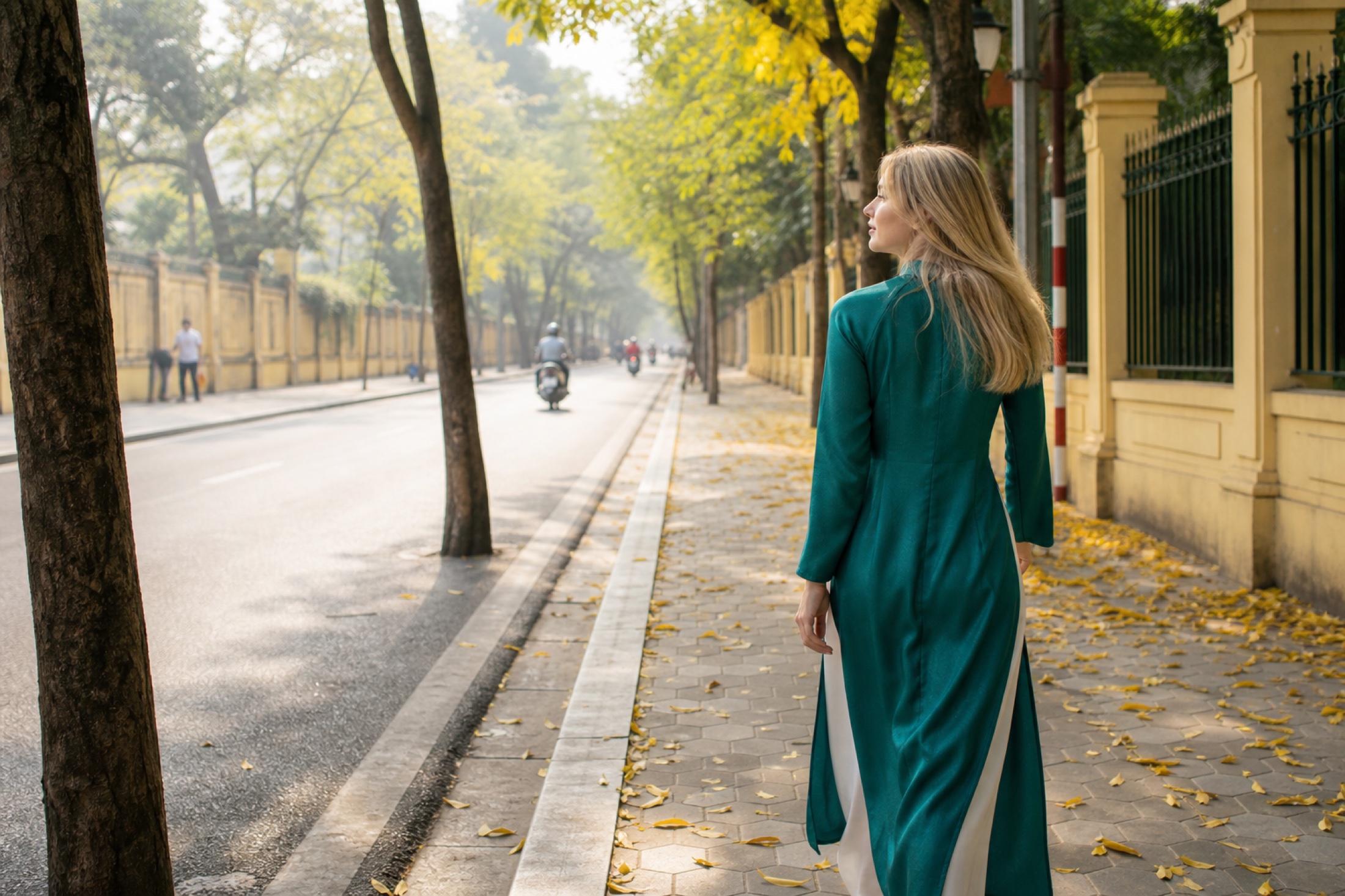
Traditional ao dai comes in fitted, flowing, or modern interpretations. Most international travelers choose fitted styles (narrow sleeves, high neckline) for contrast against texture-rich backgrounds like weathered brick or lush courtyards. Modern cuts with looser pants suit minimalist settings—white walls, geometric tiles, architectural lines.
For first-timers: fitted ao dai photographs 15–20% better in overhead and side-angle shots because the silhouette reads clearly. Flowing styles need more space (wider framing, full-body positioning) but excel in motion shots—walking through temple gates, spinning on garden paths.
Ask yourself: do you want the dress to dominate the frame, or do you want the background story visible too? Fitted = dress first. Modern/flowing = environment first. Both are correct; they're different narratives.
Cáo Studio stocks both styles in 12–15 color options (jewel tones, pastels, metallics). Explore our ao dai photoshoot service and discuss fabric weight during your WhatsApp booking consultation—heavier silk photographs with better drape in wind, lighter cotton suits humid months.
📸 Book on WhatsApp — ao dai photoshoot
How Seasonal Light Changes Your Shot Selection
Vietnam's light varies dramatically by month and location. Hanoi's dry season (October–December) offers sharp, directional light ideal for detail shots—jewelry, embroidery, facial expression. The monsoon season (May–September) produces diffused, soft light; colors appear muted, but skin tones photograph warmer and shadows are forgiving.
Hoi An and Saigon stay warm year-round, but Saigon's humidity (March–May especially) adds a haze that softens harsh midday light. If you're shooting in Hoi An, the Ancient Town's lantern-lit streets work best in early evening (5:30–7:00 p.m.) when natural light mixes with artificial amber glow.
Light by month and best session time:
| Month | Light Type | Best Session Time | Challenge |
|---|---|---|---|
| Oct–Dec (Hanoi) | Sharp, directional | 9–11 a.m. or 4–6 p.m. | Harsh shadows at noon |
| Jan–Feb (all regions) | Clear, cool | 10 a.m.–3 p.m. | Limited outdoor comfort |
| Mar–May (Saigon/Hoi An) | Diffused, hazy | 6–8 a.m. or 5–7 p.m. | Midday too bright; humidity high |
| Jun–Sep (all regions) | Soft, overcast | Any daylight hour | Rain risk; book with flex date |
| Nov (Hanoi, Hoi An) | Golden, warm | 4:30–6:30 p.m. | Short window; book early |
The "golden hour" (last 45 minutes before sunset) photographs skin tones most flatteringly and adds warmth to fabric. November in Hanoi and Hoi An is peak season for a reason: the air is clear, the angle is low, and the color temperature is 2700K (warm, film-like). If you can time your trip for late October through mid-December, your images will require minimal color correction.
What to Wear Under Your Ao Dai (and Why It Matters)
This is where most travelers—even experienced ones—miss. Ao dai is semi-transparent silk worn over fitted pants or a slip. If you wear a Western bra under the dress, the outline shows through the fabric, creating horizontal lines across the chest that flatten the silhouette and distract from the dress itself.
The three options:
- Silk slip or traditional underdress (recommended): Worn directly against skin under the ao dai. It shapes smoothly, breathes in humidity, and eliminates visible bra lines. The dress hangs naturally from the slip's seams. Cost: negligible (Cáo Studio provides this).
- Strapless or adhesive bra: Works only if your ao dai's front sits high and is opaque. Most ao dai front panels are semi-transparent. This option leaves shoulder and upper-chest areas visible without support—awkward in overhead shots.
- No undergarment: Possible if you're confident and the fabric weight is high (300+ gsm silk). Cold fabric against skin can show through in harsh light. Not recommended for first-time shoots.
First-hand truth: wear the slip. It costs nothing extra at Cáo Studio, photographs perfectly, and eliminates a decision point on shoot day. You'll see the difference in side-angle photos immediately—the dress curves from your natural shape, not from a bra outline.
For couple photoshoots where partners wear both ao dai and Western suits, the underslip principle applies to any garment where you want a clean silhouette: structure underneath, minimal visible seams.
Location Timing: Temples, Rivers & Colonial Streets
Hanoi's Old Quarter and Temple of Literature draw crowds 10 a.m.–3 p.m. daily. Shooting before 9 a.m. or after 5 p.m. cuts foot traffic by 60–70%. Hoàn Kiếm Lake (Sword Lake) is packed midday; book a 6:30 a.m. session for empty banks and mirror-calm water.
Saigon's Bitexco towers, Ben Thanh market area, and riverside parks fill during lunch and early evening. The Saigon River itself is most photogenic at sunset (6:15–6:50 p.m. depending on season), but humidity causes a visible haze. Book a makeup refresh 30 minutes before shooting to compensate for sweat in humid months.
Hoi An's Ancient Town operates on a different rhythm. The town is genuinely crowded 9 a.m.–4 p.m., but lantern-lit street sessions (after 6:30 p.m.) are almost empty and cinematically lit. Early morning (6–7:30 a.m.) offers soft light on local architecture before tour groups arrive. For Hoi An shoots, ask on WhatsApp about team travel dates.
💄 Makeup & hair at your hotel — book this if your session is early; the makeup artist comes to you, saving 30 minutes of travel time and stress.
Couple & Family Photoshoots: Positioning & Outfit Harmony
Couples photograph best when standing at a 45-degree angle to the camera (neither fully side nor fully front), with a 6–12 inch gap between bodies. This angle reads naturally and avoids the "two people pasted together" look that straight-on framing creates.
For ao dai couple shoots: one partner in fitted ao dai, the other in a tailored áo sơ mi (traditional silk shirt) or Western suit. The contrast in fabric and structure creates visual interest. Avoid both partners in ao dai unless you want a perfectly symmetrical, formal frame (which works for anniversary shoots, not romantic mood).
Family positioning depends on generational mix. Three generations (grandparent, parent, child) photograph best with the oldest seated and others arranged around. The seated figure anchors the composition and eliminates height variation stress. For parent-and-child portraits in ao dai, the parent wears the dress and the child wears coordinated pants and tunic—this creates a linked look without matching outfits directly.
Color coordination matters more than you think. If one person wears jewel tones (sapphire, emerald, ruby), the other should wear neutrals (cream, gray, muted gold) or a complementary jewel tone two shades lighter or darker. Avoid both partners in pastels—it reads as "couple's maternity shoot" even if that's not the intent.
Explore couple & family photoshoot details and share your outfit ideas during WhatsApp booking. Cáo Studio's team can suggest neutral or complementary garments if you're unsure.
Pre-Wedding & Elopement Series: Multi-Location Storytelling
A pre-wedding series typically spans 2–4 locations across one or two days, showing different aspects of your relationship: playful energy at a garden, romantic mood at a riverside, cultural moments in traditional dress. The lookbook works best when locations contrast in color palette, light quality, and mood.
A coherent two-day pre-wedding arc:
- Day 1 morning (8–11 a.m.): Heritage temple or colonial building. Wear formal ao dai or Western wedding attire. Light is directional, background is textured. Mood: romance, formality.
- Day 1 afternoon (4–6 p.m.): River or park. Wear casual linen or modern ao dai. Light is golden. Mood: ease, laughter, movement.
- Day 2 morning (6–9 a.m.): Quiet garden or residential courtyard. Wear relaxed outfits (linen, cotton). Light is soft. Mood: intimacy, stillness.
This structure ensures your final lookbook has tonal variety, costume contrast, and narrative flow. Viewers move from "formal commitment" through "joy" to "private closeness"—a complete emotional arc.
Cáo Studio handles pre-wedding and elopement packages with on-site makeup touch-ups, outfit changes, and location scouting. For Hanoi, the team knows which temple gates open early, which river banks have no foot traffic at 6 a.m., and which gardens have forgiving light year-round.
🌸 Ideas & lookbook — browse finished shoots by season and location to finalize your vision.
The Proposal & Anniversary Milestone: One Perfect Shot vs. a Series
A proposal shoot is usually one location, one outfit, one central emotion: the moment of "yes." It's shot in a single 60–90 minute window, often at sunrise to ensure privacy and perfect light. The lookbook is typically 30–50 edited images from that window.
An anniversary shoot (5, 10, 25 years) often carries more narrative: how the couple has changed, where they met, where they are now. It can span two locations and two outfit changes. The emotional weight is reflection, not surprise.
The practical difference: proposal shoots require a narrow, precise shot list (the question, the ring, the kiss, the embrace, walking away together). You and your photographer need to rehearse the moment. Anniversary shoots allow for wandering, discovery, and spontaneity because there's no single "do or die" moment.
Book a proposal or anniversary session here. Discuss with the team whether you want one location (30–45 minutes, 30–40 final images) or two (3+ hours, 60–80 final images). The emotional arc is different; the time and cost reflect that.
Makeup & Hair: On-Site at Your Hotel or at the Studio?
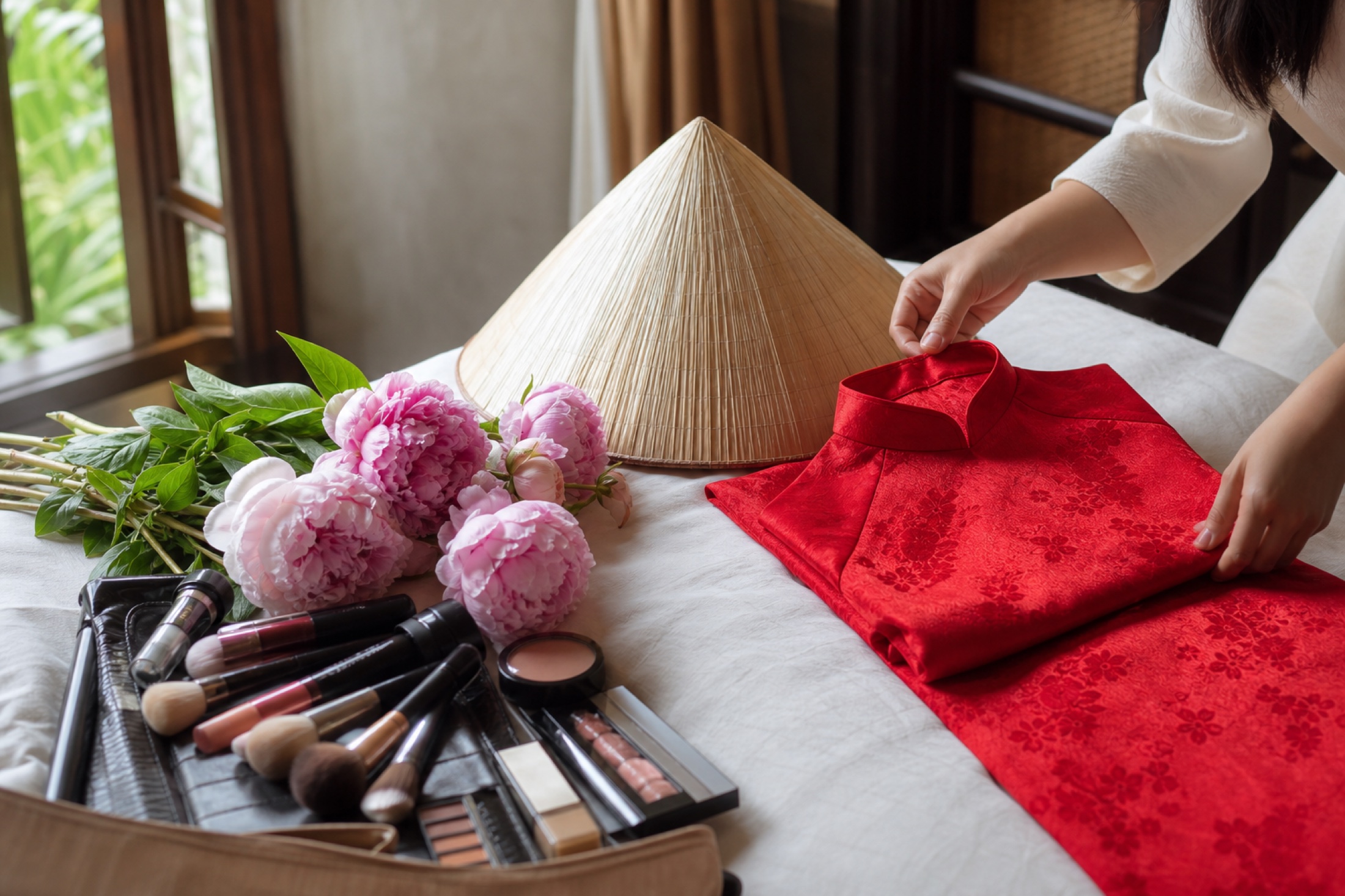
Cáo Studio offers both. Studio sessions (in Hanoi at 3 locations, in Saigon at 1 location) include a dedicated makeup and styling room with full mirrors, natural light, and backup products. Hotel sessions have the makeup artist bring a portable kit to your room or a quiet lounge space.
Studio makeup:
- 60–90 minutes
- Full product range (bridal-grade foundations, 50+ eyeshadow options)
- Trial run possible 2–3 days before shoot
- Best if you want dramatic or fashion-forward makeup
Hotel makeup:
- 45–60 minutes
- Portable but professional-grade kit
- Zero travel time before shoot (you're ready in your accommodation)
- Best if you're arriving early morning or prefer convenience
- Ideal for couple shoots where both partners get makeup on-site
Both services include hair styling (braid, bun, loose waves) and touch-up products for the shoot. Learn more about makeup and hair services.
The decision hinges on two factors: do you want a trial (studio only) and how much travel time stresses you before a big moment? Most international travelers choose hotel makeup for ao dai shoots (no stress, zero friction) and studio for pre-wedding series (trial, more product options, fuller experience).
What to Check Before You Book: A Practical Checklist
Before you send a WhatsApp message, clarify these five things with yourself:
- Outfit clarity: Do you have the ao dai, suit, or dress already, or does Cáo Studio need to source it? (They can help; mention this in your first message.)
- Location specificity: Do you want a specific temple, river, or street? Are you okay with photographer recommendation? (Hanoi/Saigon = guaranteed locations; Hoi An = team travels on specific dates).
- Makeup trial yes/no: First time in ao dai makeup? Book a trial at studio 2–3 days before. Skip if you've done this before.
- Season realism: Shooting in July? Expect humidity; book with a flexible indoor backup location (temple interiors, covered markets).
- Final image count and delivery: Do you want 40 images, 80, or 150? Raw files, edited gallery, or printed album? Clarify in your booking—this affects turnaround time and cost.
Ask all five questions in your WhatsApp message to Cáo Studio. The team replies with specifics within 2–4 hours (Vietnam time, Monday–Saturday).
---
FAQ
What's the best month to shoot in Vietnam for weather and light?
October through mid-November: clear skies, golden hour is warm and long, humidity is low, and crowds are smaller before peak holiday season. December is also excellent but noticeably colder in Hanoi (15–20°C). Avoid May–September if you dislike heavy humidity and afternoon rain risk.
Do I need to own an ao dai before booking, or can Cáo Studio provide one?
Cáo Studio stocks fitted and modern ao dai in 12–15 colors and most sizes. Mention your preference and fit concerns in your WhatsApp booking message. If you prefer a personal or antique ao dai, bring it; they style and photograph what you choose.
How long does a typical photoshoot session last, and how many images do I get?
Ao dai single-location shoots are 60–90 minutes (30–50 edited images). Couple shoots are 2–3 hours (50–80 images). Pre-wedding multi-day series varies by locations (ask during WhatsApp consultation). All sessions include makeup and styling time.
Can I shoot in Hoi An even if Cáo Studio doesn't list specific dates?
Yes. Cáo Studio travels to Hoi An on a rotating schedule. Send a WhatsApp message with your preferred dates, and they'll confirm availability or suggest the nearest available window. The Ancient Town and surrounding areas are worth the trip.
What's the difference between editing style in tropical humidity (soft, muted colors) vs. dry season (sharp, vibrant)?
Dry-season light is contrasty and requires minimal color correction. Humid-season images often have a natural haze; editors add slight clarity and saturation to compensate. Both look beautiful; they're just different aesthetic starts. Cáo Studio's editing matches the season and your preference—discuss this during consultation. ===BUTTON CTA LINES=== 📸 Book on WhatsApp — ao dai photoshoot 💄 Makeup & hair at your hotel 🌸 Ideas & lookbook