Cáo Studio · Panduan sesi foto di Vietnam · Ao Dai Photoshoot Vietnam: Panduan Memilih Studio & Paket 2026
Pastel Ao Dai Photoshoot: Light, Outfit & Where to Shoot
Tim Cáo Studio · Hanoi · 2026-10-03
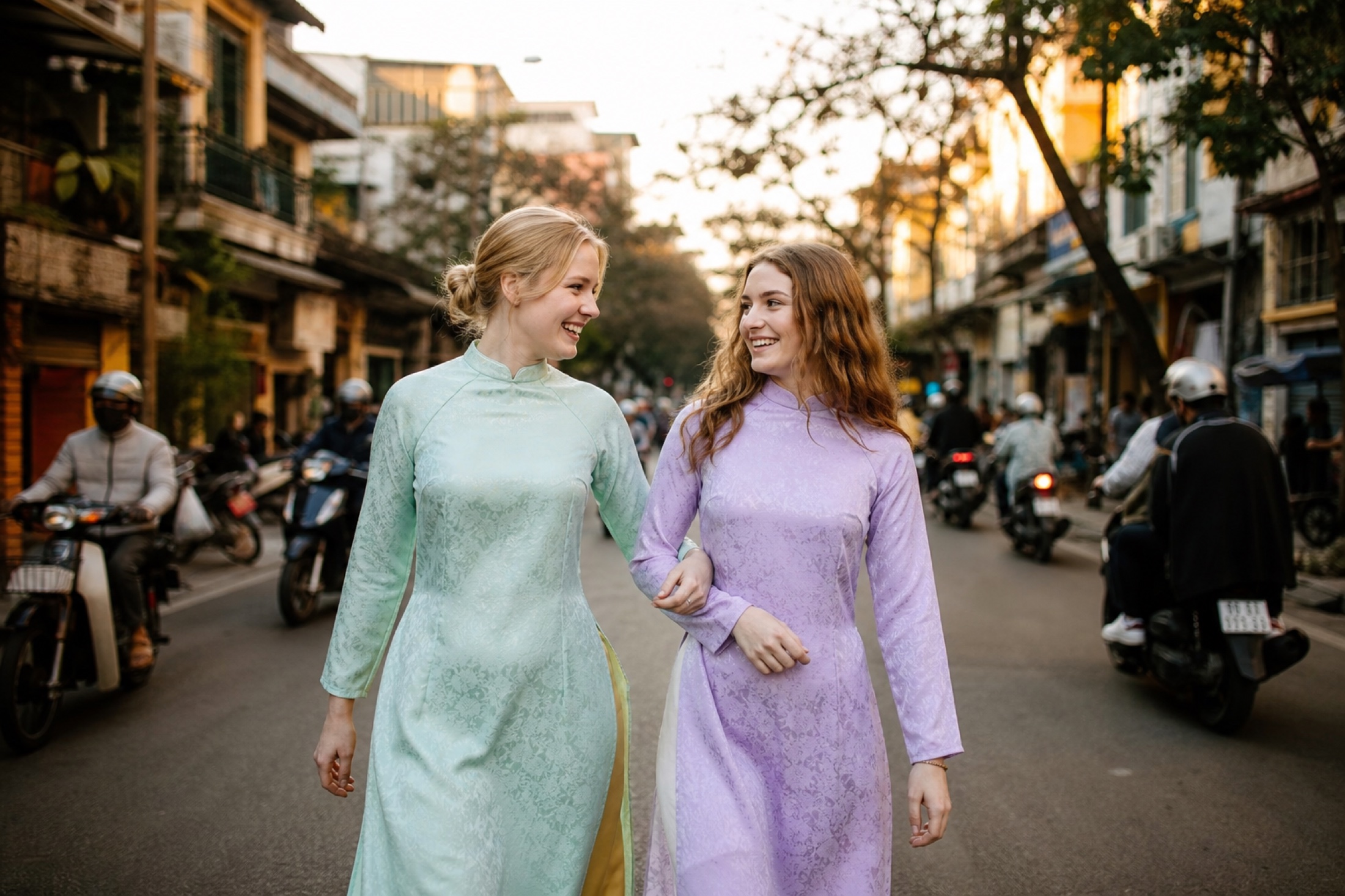
A pastel ao dai photoshoot is a directed half- or full-day session in which you wear a soft-toned traditional tunic and trousers (or dress), with professional makeup and hair, shot in real light by a single team that frames you against Vietnam's landmarks, gardens or streets. Pastels (blush, sage, lavender, cream, pale blue) read best in golden-hour side light (sunrise or sunset, 6–7 am or 5–6 pm) and in overcast morning conditions; they can wash out in harsh midday sun. The shoot unfolds in wide frames first—you walking, looking at a companion, moving through space—then medium and close detail. Cáo Studio directs every pastel session in Hanoi or Ho Chi Minh City over 2–3 hours, including outfit choice, makeup and same-day light scouting; edited frames and a short vertical film arrive within 48 hours. Book on WhatsApp to confirm your shade, preferred locations and light conditions before the session date. 📸 Book on WhatsApp — ao dai photoshoot ---
Pastel vs. Jewel Tone: Why Light Matters More Than Color
Pastel ao dais succeed or fail based on light timing, not outfit choice alone. A blush pink reads ethereal in soft dawn side light but nearly invisible in harsh 11 am sun; a jewel emerald holds presence all day. If you love pastels, you must commit to 6–7 am or 5–6 pm shooting. Off-peak hours mean fewer crowds at temples and bridges, sharper shadows for depth, and natural fill light from water or stone. Book a dawn session if your schedule allows; a late-afternoon slot works second-best but means tighter timing before dark. Overcast mornings (December–February in Hanoi, February–May on the central coast) are pastel-friendly too—soft, even light without glare—but plan for longer shooting windows and test your chosen shade indoors first.
| Condition | Best for Pastel | Light Quality | Walking Ease |
|---|---|---|---|
| Dawn (6–7 am) | Blush, lavender, sage | Soft side light, no glare | Empty streets, quiet temples |
| Overcast morning (8–11 am) | Any pastel | Diffused, even, cool | Busy by 9 am; no shadow depth |
| Midday (11 am–4 pm) | Avoid pastels | Harsh overhead, colour fade | Crowded, flat light |
| Golden hour (5–6 pm) | Blush, cream, pale blue | Warm side light, glow | Busy; last light tight |
| Overcast afternoon (2–4 pm) | Any pastel | Soft, cool, flat | Walking safe; less mood |
The key trade-off: pastels need early or late light, and early light means you move fast; late light is prettier but the session ends in 45 minutes when the sun drops.
---
Which Pastel Shade Works for Your Skin Tone and Location?
Pastel shade choice depends less on fashion and more on how it sits against your skin in the actual light you'll shoot. A pale lavender that feels safe indoors can look washed-out against the grey stone of Huc Bridge (Cầu Húc, Hanoi's famous red bridge) in weak dawn light; the same shade glows warm if you add a deeper lipstick and shoot with the sun behind you. Warm pastels (blush, peachy cream, pale yellow) suit golden-hour shoots and warm-toned skin; cool pastels (lavender, sage, pale blue) hold their own in overcast conditions and suit cooler undertones. Neutral skin tones can anchor any pastel—the difference is in makeup strength, not the tunic. Book a consultation call on WhatsApp before choosing your ao dai; our team will ask about your skin, the landmarks you want and the light window you prefer, then recommend a shade and suggest a test photo indoors. Many travelers bring two ao dais—one pastels, one jewel—to shoot both in the same session if time and budget allow. Hoi An's Ancient Town fits pastels well because the narrow alleys diffuse light softly; Hanoi's lake walks and temple gardens need precise timing.
---
What to Check Before Booking a Pastel Session
Before you commit to a pastel ao dai shoot, verify four things with the studio:
Light timing and season. Ask which month you're traveling and which landmarks you want. If it's October–November (rainy and grey in the central coast and south), pastels are risky—confirm the studio has overcast-light experience there. If it's May–September (hot, bright, midday-harsh in the north), dawn or dusk sessions are non-negotiable.
Outfit rental or supply. Decide whether you'll bring your own ao dai or rent one. If renting, confirm the studio stocks your preferred pastel shade and your size. Ao dai rental at Cáo Studio includes tailoring advice and backup options if the first choice doesn't fit your frame or skin tone on the day. Ask on WhatsApp whether the rental comes with undergarments and shoes—most do, but details vary.
Makeup strategy. Pastels need stronger makeup than you wear daily. Lips should have pigment (blush tones work; pale pink washes out); eyes need definition to hold the frame; foundation should match exactly or the tunic will dominate. Tell the studio your makeup preferences (no false lashes, natural brows, bold lips, etc.) when booking, so the artist arrives prepared.
Weather and backup plan. Confirm what happens if it rains or clouds thicken past shooting. Most studios have a reschedule-free policy if light is unsafe or visibility is nil, but some charge a standby fee. Understand the studio's weather terms before you pay.
---
How a Pastel Ao Dai Shoot Unfolds: Timeline and Logistics
A typical pastel session with Cáo Studio runs like this:
Hour 1 (before location). You meet the team at your hotel or a pre-agreed spot. Makeup and hair happen first—45 minutes for a full pastel look, including foundation, brows, eyes, and a long-wear lip. The makeup artist will ask about your comfort (too much? too bold?) and adjust. While you're in the chair, the photographer scouts the first location in real light, checking shadows, foot traffic and framing angles. Once makeup is set, you step into your ao dai and it's fitted for movement (crucial: the tunic must not hug too tight or restrict your stride).
Hour 2–3 (location shooting). The team moves to your first location—say, Huc Bridge at 6:15 am, when light is soft and the street is mostly clear. You don't pose. Instead, the photographer directs: "Walk toward the water. Don't look at the camera yet. Now turn and find each other's eyes." The camera captures wide shots first (you in context), then tighter frames as you move. The makeup and hair artist watches your tunic hem, your bra line, whether the veil is catching light as intended. If crowds build or light shifts, you move fast. Most pastel shoots hit 2–3 locations in 2–3 hours.
After the shoot. All frames are backed up that day. You receive a preview gallery (sometimes with a rough color grade) within 24 hours and final edited photos plus a short vertical film within 48 hours. Turnaround is fast because the team shoots less footage—directed frames, not hundreds of shots—and edits in batches.
Common delays: dawn shoots sometimes start late if traffic is worse than expected (always add 15 minutes for travel); golden-hour shoots are race-against-dark and photographers sometimes cut location swaps short to secure the final light. Communicate your top-priority location to the team on WhatsApp before the day; they'll time the shoot to hit it in the best light.
---
Pastel Sessions with Partners, Family or Solo: Booking Options
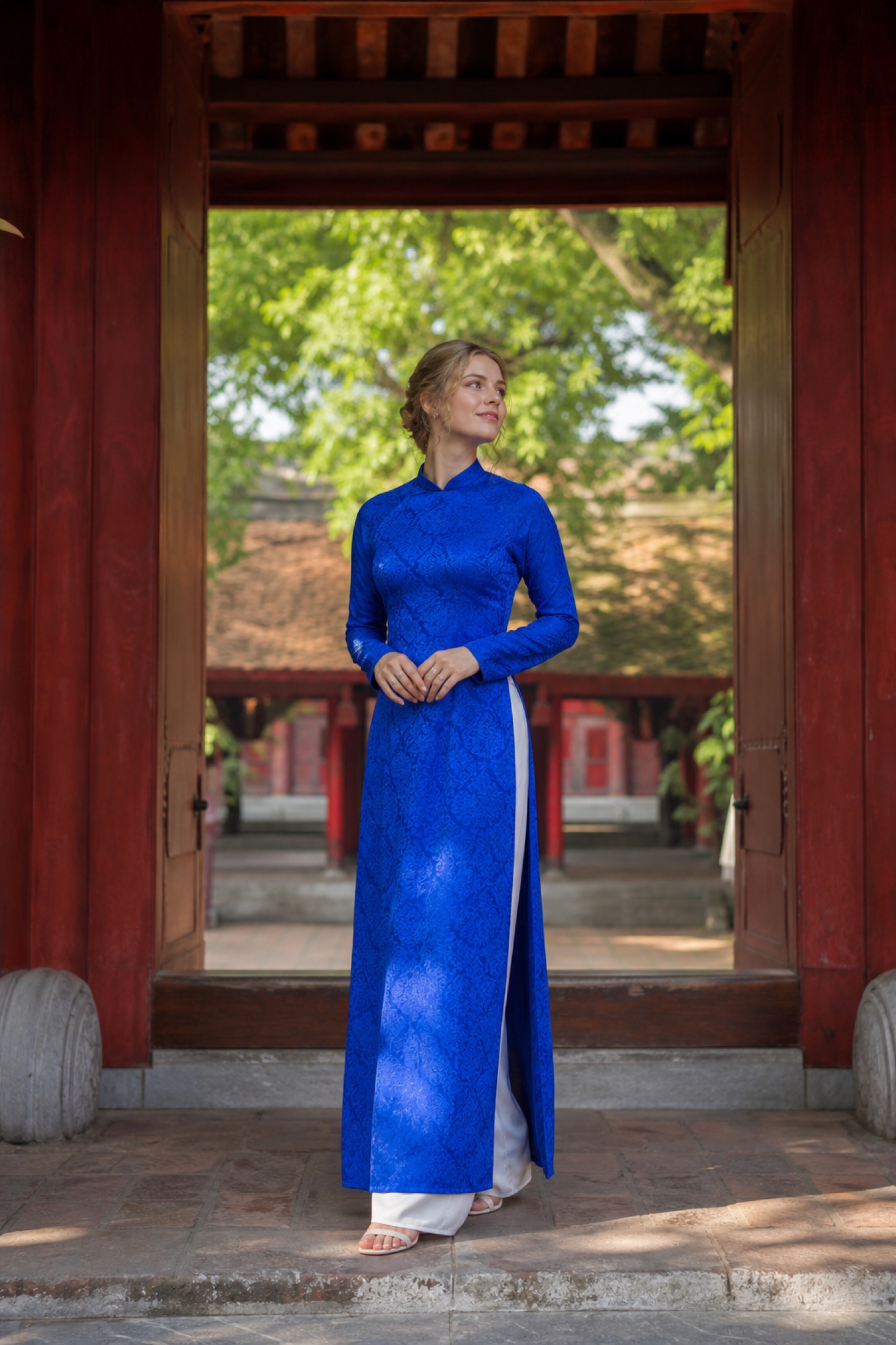
Pastel ao dais look strongest when worn by one person—the tunic's softness is the frame. If you're traveling with a partner or family, you have three paths:
- Solo pastel. You wear the soft ao dai; a partner wears a suit, casual wear, or a jewel-tone ao dai. The light and composition center on you. This works best for individual portraits and fits a 2–3 hour session.
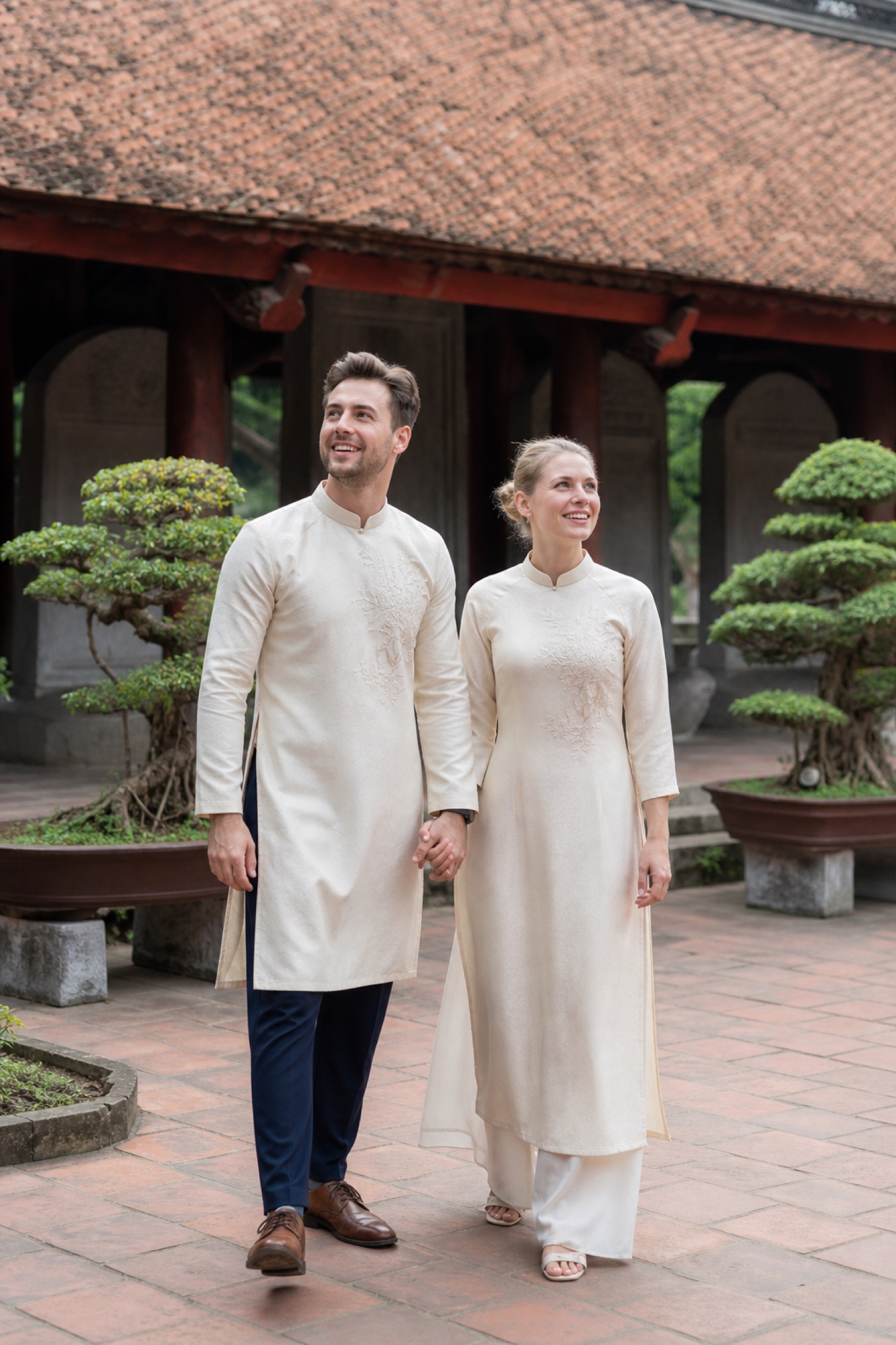
- Couple pastel couple-and-guest ensemble. Both partners wear pastels—complementary shades like blush and sage. This reads well in golden hour and requires the same light discipline. A couple photoshoot with dual pastels is a longer session (usually 3–4 hours to cover all combinations).
- Family pastel mix. One or two family members wear pastels; others in neutral or jewel tones. Harder to balance visually but possible with strong direction. A family photoshoot with at least one pastel ao dai works if the photographer commits to pastel-forward framing.
For proposal and anniversary bookings, pastels are popular because they photograph as soft, vulnerable, romantic. A blush or lavender ao dai in golden light beside a partner in a suit reads tender and personal—exactly the mood that moment needs.
For pre-wedding or elopement shoots, pastel bridal ao dais are available through rental partners if the studio doesn't stock them; confirm color and delivery timing 2–3 weeks ahead.
---
Pastel Ao Dai Photoshoots in Hanoi vs. Ho Chi Minh City vs. Hoi An
Each city's light, crowds and landmark styles suit pastels differently.
Hanoi (North). Winter (December–February) is cool, grey and ideal for pastels—soft overcast light and your ao dai won't fade. Huc Bridge, Tran Quoc Pagoda, the old quarter's narrow streets, Hoang Cau Lake at dawn. Summer (May–September) is brutally bright at midday; you must shoot 6–7 am or 5–6 pm. Cáo Studio Hanoi has the most pastel-friendly seasonal window December–March.
Ho Chi Minh City (South). Dry season (December–April) is your best bet—cooler air, lower humidity, manageable light. Bitexco, Ben Thanh Market's alleys, riverside walks, Jade Emperor Pagoda. May–November is hot, sticky and harsh at midday; pastels fade. Late afternoon shoots (5–6:30 pm) work but must start on time—dark comes fast and the city's reflected heat can blow out pale tones. Cáo Studio Saigon books more pastel shoots December–April.
Hoi An (Central coast). This is the pastel capital. Narrow alleys, soft diffused light, lanterns and riverfront. Pastels photograph beautifully year-round here because of the low-contrast architecture and reflected light off water. February–August is driest; September–November is rainy and grey (less ideal for pastels but still workable in overcast morning light). Hoi An shoots are by appointment—the team travels to join you. Ask on WhatsApp for Hoi An dates and availability.
Each location has different foot traffic patterns. Book dawn or dusk if you want empty frames; morning (8–11 am, overcast) if you want soft light but can tolerate some crowds.
---
A Decision Framework: Is a Pastel Ao Dai Shoot Right for You?
Use this checklist to decide if a pastel photoshoot fits your trip and vision:
✓ Choose pastel if: You're traveling December–March (Hanoi), December–April (Saigon) or February–August (Hoi An); you can commit to a 6–7 am or 5–6 pm shoot time; you want a soft, vulnerable, romantic mood in your frames; you're comfortable in makeup and have at least 2 hours. Pastels suit solo portraits, couple shoots, and proposal/anniversary sessions best.
✗ Skip pastels if: You're traveling May–September in Hanoi or May–November in Ho Chi Minh City without a guaranteed dawn/dusk slot; you want frames with bold presence (jewel tones hold light better); you're on a tight, inflexible schedule that can't accommodate sunrise/sunset timing; you sunburn easily and want to avoid very early mornings.
⚙️ Hybrid option: Book a pastel ao dai for one location shot in ideal light (e.g., 6:15 am at Huc Bridge in Hanoi), then change into a jewel-tone tunic or outfit for a second location in normal daylight. This gives you both moods and takes pressure off timing. Ask the studio about outfit-swap logistics and timing on WhatsApp.
📸 Book on WhatsApp — ao dai photoshoot
---
What to Check Before You Book
1. Season and light timing. Confirm your travel month and preferred shoot time (dawn or golden hour). If it's outside the pastel-friendly window for your city, ask the studio if overcast mornings work instead.
2. Shade and size. If renting, ask on WhatsApp which pastel shades are in stock and whether your size is available. Request a photo of the actual ao dai (not a generic style image) so you know the neckline, sleeve length and hem.
3. Makeup and hair. Tell the studio your makeup comfort level (natural, bold, no false lashes, etc.) so the artist arrives prepared. Ask whether they'll adjust if the look feels too strong on the day.
4. Location and crowd timing. Choose your top 2–3 landmarks and ask the studio to recommend the light window that suits both pastel and the view (e.g., Huc Bridge works best 6:15–6:45 am, before foot traffic).
5. Weather backup. Confirm the studio's reschedule policy if it rains or clouds too heavy for pastel light. Understand whether you forfeit payment or get a free reschedule.
6. Turnaround time. Verify that edited photos and video arrive within 48 hours (standard for Cáo Studio) and ask what the deliverables include—number of edits, video length, file formats.
7. Post-production style. Ask how the studio edits pastels—some boost saturation slightly to prevent washout; others keep a muted, cool tone. Look at the lookbook to see the studio's pastel editing style.
---
FAQ
Can I wear a pastel ao dai in the rain?
Pastels look washed out in heavy overcast or rain, and wet fabric clings uncomfortably. If rain is forecast, ask the studio about rescheduling or moving to a covered location (like a temple interior or covered market). A 48-hour rebook is usually free if light conditions are unsafe.
What pastel shade is most flattering on tan skin?
Blush, peach and warm sage suit tan skin well in golden light. Cool pastels (lavender, pale blue) work too if you pair them with warm-toned makeup and jewelry. Ask the studio to recommend 2–3 shades based on your undertone, then request a comparison photo indoors before deciding.
How long do pastel ao dais stay in focus and sharp?
Light focus is the issue, not fabric. Pastel ao dais photograph sharpest in soft side light (dawn, golden hour, overcast mornings). In harsh midday sun they can look flat and lose saturation in frame. Sharpness depends on the photographer's settings and the scene contrast, not the ao dai itself.
Can I do a pastel shoot in May or June in Hanoi?
Unlikely to succeed. May–September in Hanoi is hot, bright and humid. Midday light is harsh and pastels wash out. You'd need to book a 6–7 am session; even then, the heat and glare make pastels risky. Consider a jewel tone for summer, or reschedule your shoot to December–March.
Do I need special undergarments under a pastel ao dai?
Yes. A strapless or nude slip is essential to avoid visible bra lines through pale fabric. Ask the studio whether the ao dai rental includes undergarments; most do. If you're bringing your own ao dai, bring a slip and nude or matching undergarments.
How much editing is needed to make a pastel ao dai look rich in photos?
Good pastels need minimal editing—soft color correction, slight glow and shadow lift. Cáo Studio avoids over-saturation (which looks unreal) and instead boosts the ao dai through framing, light and makeup. Expect a cool-toned, soft aesthetic in the final files, not a boosted, warm one.
Can a pastel ao dai work for a wedding day photographer session?
Yes, if you're a groom's mother or a guest in a formal ao dai photo. For bridal wear, pastels are risky because brides need visual presence in group frames. A jewel-tone or white bridal ao dai reads stronger. Discuss with the studio on WhatsApp if pastel is your preference; they'll help you decide based on your wedding's light and venue.
What's the difference between booking a solo pastel shoot vs. a couple photoshoot with a pastel ao dai?
Solo pastel shoots are shorter (2–3 hours), focus on you alone, and move faster between locations. Couple shoots are longer (3–4 hours), frame both of you together and require more setup and direction. Costs differ because couple shoots require more time, more outfit changes and more varied framing. Ask for a quote on WhatsApp for both options.
Is a pastel ao dai suitable for a family photoshoot?
Yes, if one family member wears pastel and the rest wear complementary jewel tones or neutrals. Family framing is harder to balance with multiple pastels, so the studio will likely feature one person in soft tones and surround them with richer colors. Ideal for a parent in blush and children in jewel tones, or vice versa.
When should I book a pastel ao dai shoot for the best season?
December–March for Hanoi, December–April for Ho Chi Minh City, February–August for Hoi An. Book 2–4 weeks ahead so the studio can confirm season, light and your preferred shade. WhatsApp a reference photo (style and color) so the team can source or recommend the right ao dai.
Pertanyaan umum
Can I wear a pastel ao dai in the rain?
Pastels look washed out in heavy overcast or rain, and wet fabric clings uncomfortably. If rain is forecast, ask the studio about rescheduling or moving to a covered location (like a temple interior or covered market). A 48-hour rebook is usually free if light conditions are unsafe.
What pastel shade is most flattering on tan skin?
Blush, peach and warm sage suit tan skin well in golden light. Cool pastels (lavender, pale blue) work too if you pair them with warm-toned makeup and jewelry. Ask the studio to recommend 2–3 shades based on your undertone, then request a comparison photo indoors before deciding.
How long do pastel ao dais stay in focus and sharp?
Light focus is the issue, not fabric. Pastel ao dais photograph sharpest in soft side light (dawn, golden hour, overcast mornings). In harsh midday sun they can look flat and lose saturation in frame. Sharpness depends on the photographer's settings and the scene contrast, not the ao dai itself.
Can I do a pastel shoot in May or June in Hanoi?
Unlikely to succeed. May–September in Hanoi is hot, bright and humid. Midday light is harsh and pastels wash out. You'd need to book a 6–7 am session; even then, the heat and glare make pastels risky. Consider a jewel tone for summer, or reschedule your shoot to December–March.
Do I need special undergarments under a pastel ao dai?
Yes. A strapless or nude slip is essential to avoid visible bra lines through pale fabric. Ask the studio whether the [ao dai rental](/id/ao-dai-rental) includes undergarments; most do. If you're bringing your own ao dai, bring a slip and nude or matching undergarments.
How much editing is needed to make a pastel ao dai look rich in photos?
Good pastels need minimal editing—soft color correction, slight glow and shadow lift. Cáo Studio avoids over-saturation (which looks unreal) and instead boosts the ao dai through framing, light and makeup. Expect a cool-toned, soft aesthetic in the final files, not a boosted, warm one.
Can a pastel ao dai work for a [wedding day photographer](/id/wedding-photographer) session?
Yes, if you're a groom's mother or a guest in a formal ao dai photo. For bridal wear, pastels are risky because brides need visual presence in group frames. A jewel-tone or white bridal ao dai reads stronger. Discuss with the studio on WhatsApp if pastel is your preference; they'll help you decide based on your wedding's light and venue.
What's the difference between booking a solo pastel shoot vs. a [couple photoshoot](/id/couple-photoshoot) with a pastel ao dai?
Solo pastel shoots are shorter (2–3 hours), focus on you alone, and move faster between locations. Couple shoots are longer (3–4 hours), frame both of you together and require more setup and direction. Costs differ because couple shoots require more time, more outfit changes and more varied framing. Ask for a quote on WhatsApp for both options.
Is a pastel ao dai suitable for a [family photoshoot](/id/family-photoshoot)?
Yes, if one family member wears pastel and the rest wear complementary jewel tones or neutrals. Family framing is harder to balance with multiple pastels, so the studio will likely feature one person in soft tones and surround them with richer colors. Ideal for a parent in blush and children in jewel tones, or vice versa.
When should I book a pastel ao dai shoot for the best season?
December–March for Hanoi, December–April for Ho Chi Minh City, February–August for Hoi An. Book 2–4 weeks ahead so the studio can confirm season, light and your preferred shade. WhatsApp a reference photo (style and color) so the team can source or recommend the right ao dai.