blog
What to Wear in Hanoi: Month-by-Month Packing Guide
What month has the most comfortable weather in Hanoi?
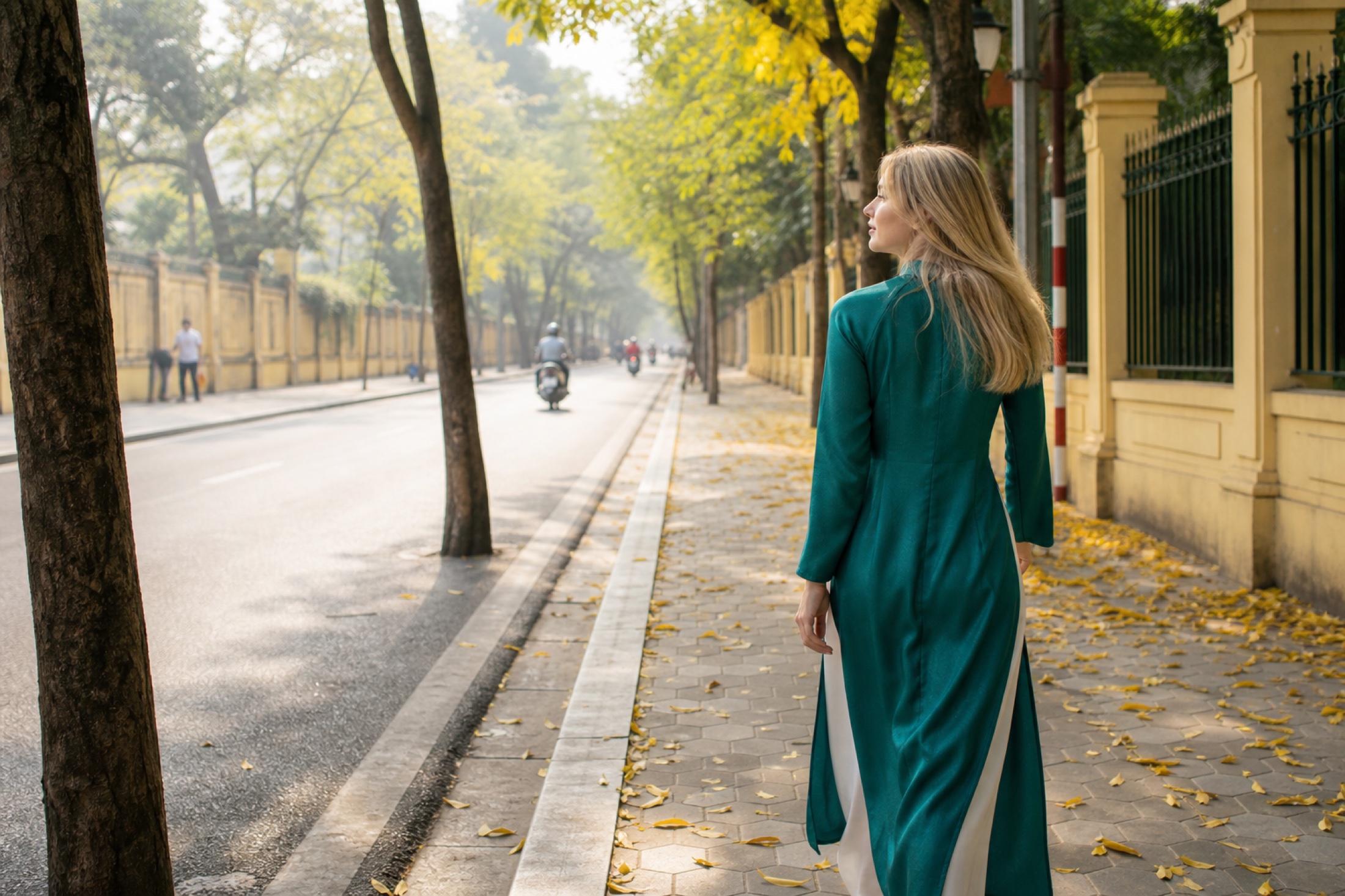
October and April are ideal: cool mornings (18–22°C), warm afternoons (26–28°C), low humidity, minimal rain. September humidity lingers; May heat builds. March–April spring and September–October autumn bookend the extreme seasons. Outdoor photoshoots and walking neighborhoods feel effortless these months without heavy sweating or layering fatigue.
📸 Book on WhatsApp — ao dai photoshoot
How should you layer clothing for Hanoi's winter?
Winter (November–February) requires 2–3 layers: a breathable base (moisture-wicking merino or synthetic), a mid-weight fleece or cardigan, and a windproof jacket. Evenings drop to 12–15°C; midday may reach 18°C. Avoid cotton tees (they trap sweat then chill you). Scarves add warmth and style for pre-wedding and elopement photoshoots. Remove layers indoors—heated spaces warm quickly.
Why does Hanoi monsoon season affect your outfit choices?
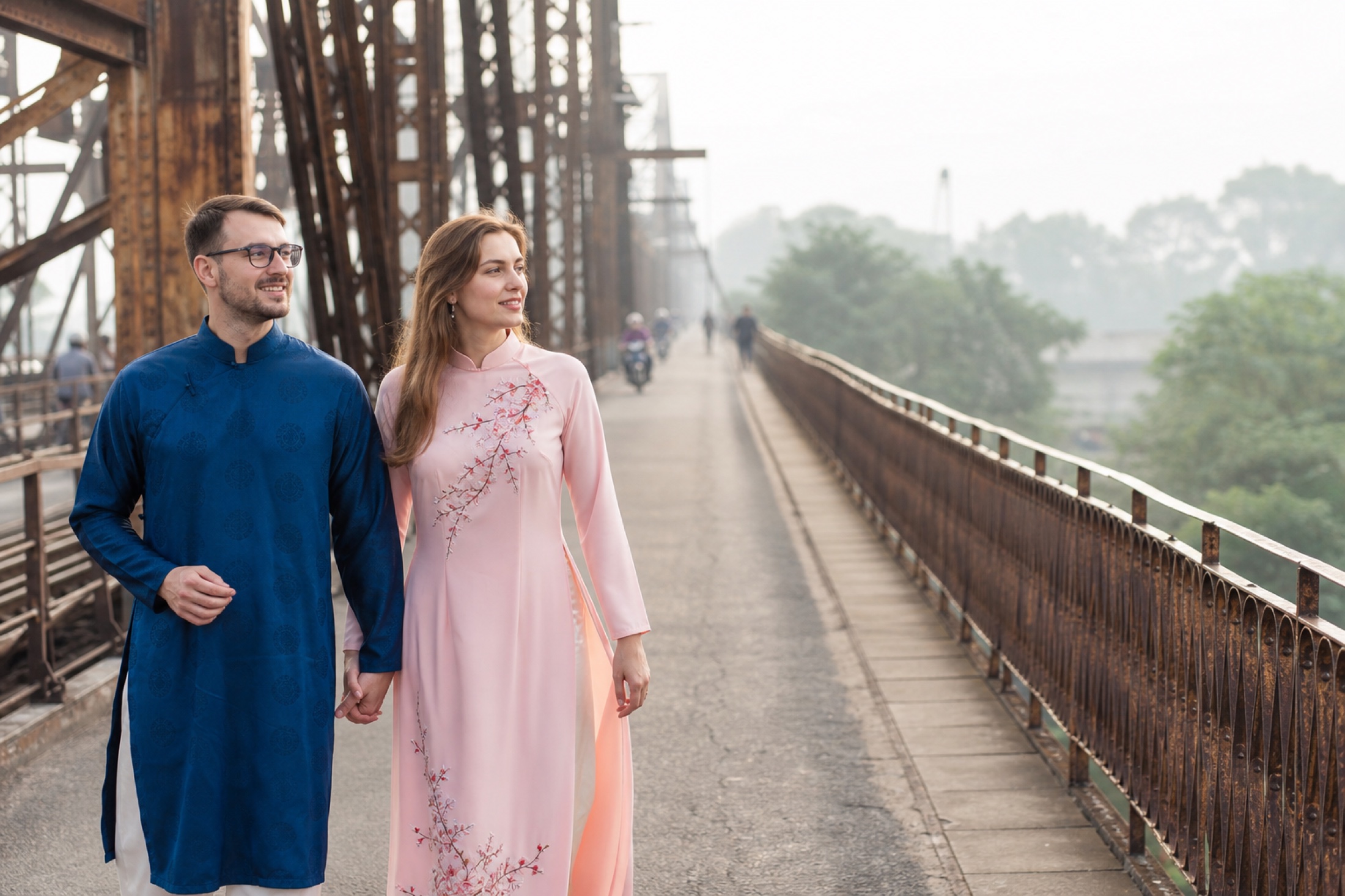
Heavy rain (May–September, especially July–August) creates humid, slippery streets. Wear closed-toe, slip-resistant shoes; carry a lightweight rain jacket rather than an umbrella (hands stay free on uneven pavements). Quick-dry fabrics work better than cotton. Light colors show sweat and mud; darker tones hide stains. If you're planning a couple or family photoshoot, reschedule for early morning or late afternoon—midday clouds suit overcast moods but limit soft light.
What fabric and colors work best for Hanoi's humidity?
| Season | Top Fabric | Bottom Fabric | Best Colors | Why It Works |
|---|---|---|---|---|
| May–Sept (32–36°C) | Linen, bamboo, cotton voile | Linen shorts, cotton pants | White, cream, pastels | Reflects heat, hides sweat |
| Oct–April (15–25°C) | Merino wool, lightweight cotton blends | Cotton jeans, linen trousers | Jewel tones, black, navy | Flatters skin in soft light |
| Nov–Feb (12–18°C) | Wool sweater, fleece cardigan | Wool-blend pants, jeans | Warm earthtones, burgundy | Insulates without bulk |
Linen wrinkles; embrace texture or press before shoots. Synthetic blends dry faster after rain. Avoid silk—sweat stains show instantly. For hotel makeup and hair services, choose fabrics that move freely so our team can access your back and arms without restriction.
Which footwear works on Hanoi's sidewalks and streets?
Hanoi's pavements are uneven, often wet, and packed with motorbikes and vendors. Wear:
- Closed-toe sneakers or walking shoes (spring/autumn, year-round urban exploring): Grip wet tiles, protect toes from curb accidents.
- Slip-resistant sandals (summer, dry conditions only): Leather or rubber soles; avoid flip-flops—they catch on pavement edges.
- Waterproof ankle boots (winter, monsoon): Keep feet dry; leather or synthetic uppers repel splashes.
- Flat or low-heel shoes for photoshoots: High heels sink into sidewalk cracks and tire on cobblestones. If you love heels, book studio sessions at one of our three Hanoi branches—our floors are level and controlled.
Backup choice: Bring two shoes. If rain floods a morning shoot, swap into dry footwear mid-session. Always test shoes indoors before a full day of sightseeing.
How do you prepare an ao dai for Hanoi's climate and photoshoots?
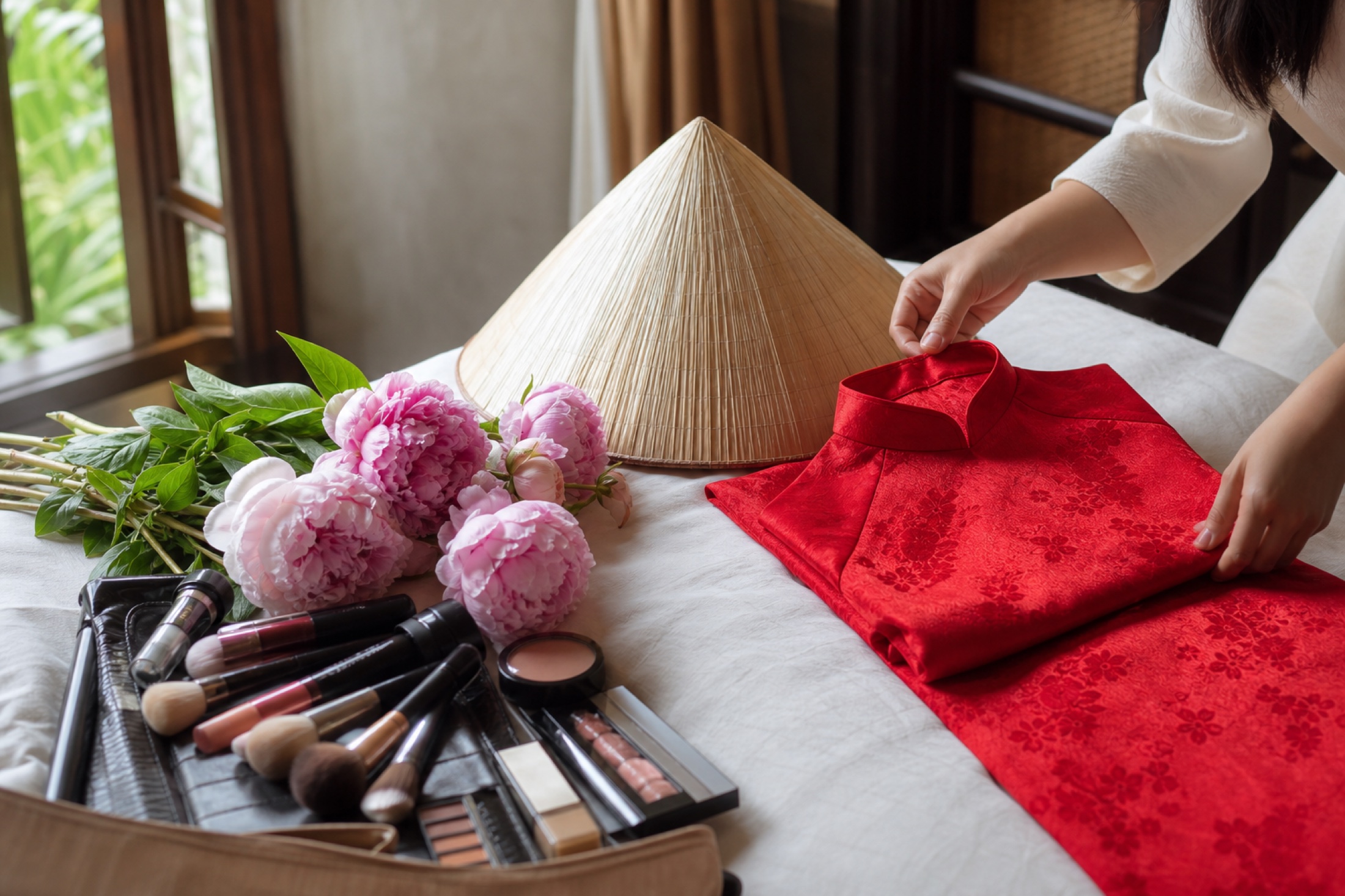
An áo dài is cotton or silk; both wrinkle and absorb humidity. Store it flat, not folded, for 48 hours before shooting. Steam gently the morning of your ao dai photoshoot to release creases. In humid months (May–September), choose cotton áo dài over silk—silk clings when damp and dulls under perspiration. Lighter colors (cream, pastel pink, lavender) photograph better in overcast Hanoi light. Darker tones require stronger flash or backlit positioning. Our makeup and hair team can recommend undergarment fabrics (breathable slip or shorts) that don't show through or ride up in humidity.
What accessories protect you and enhance your Hanoi look?
- Lightweight scarf or pashmina: Wraps around shoulders in cool months; covers hair in temples (etiquette) without adding bulk.
- Sunglasses and SPF 30+ sunscreen: Hanoi sun is intense March–October, even on cloudy days. UV reflection bounces off water and concrete.
- Crossbody bag, not backpack: Keeps hands free on crowded streets and avoids sweat marks on shoulders during photoshoots.
- Compact umbrella: Folds into bags; choose darker colors (white attracts dust). A good rain jacket replaces it May–September.
- Hat or cap (optional): Protects face and provides framing for portrait angles. Avoid large brims if you're booking a proposal or anniversary package—hats shadow the face in intimate close-ups.
Accessories also serve as focal points during couple and family photoshoots—hats, scarves, or jewelry draw eyes and add movement in still frames.
What should you avoid wearing in Hanoi?
- Synthetic fabrics in summer (May–September): Polyester traps sweat and doesn't breathe; you'll overheat.
- All-white outfits in monsoon months: Rain and muddy streets stain fabric instantly; impossible to edit cleanly in photos.
- Loose, bulky sweaters in spring/autumn: Humidity isn't severe enough to justify volume; clothes bunch under jackets or photographs as shapeless.
- Leather jackets in heat: Leather doesn't breathe and cracks if it dries too slowly after rain.
- Uncomfortable shoes for sightseeing days: Hanoi neighborhoods require 2–4 hours of walking. Blisters ruin photoshoot mood and limit movement in frames.
---
A Decision Framework: Choosing What to Pack
Ask yourself three questions before packing:
- What are your main activities? (temples, street food, museums, photoshoots, nightlife)
→ Temples require covered shoulders and knees—layers work best. → Photoshoots need colors and fabrics that flatter your skin tone and photograph in Hanoi's soft light.
- How many days, and which months?
→ Under 3 days in one season? Bring one outfit type per activity. → 5+ days across seasons (e.g., April into May)? Gradual wardrobe transition—start with layers, add lighter pieces.
- Will you do laundry, or rely on luggage?
→ Hotels offer laundry (1–2 day turnaround); pack 4–5 tops, 2–3 bottoms, refresh mid-trip. → No laundry? Bring 8–10 tops and plan for moisture-wicking, quick-dry fabrics.
What to Check Before You Pack
- Current Hanoi weather forecast: Check 7–10 days before arrival. Monsoon weeks shift; a "summer" trip in late August might be drenched.
- Your photoshoot date and location: Are you shooting indoors at our Hanoi studio (climate-controlled) or outdoors (weather-dependent)? Our lookbook shows how different seasons photograph; use it to select colors.
- Your skin tone and undertone: Cool tones (pink, red undertones) pop in jewel colors and black; warm undertones (yellow, olive) shine in creams, terracottas, and earthy tones. Hanoi's soft, humid light is forgiving—avoid neon or overly bright synthetic dyes.
- Layering pieces you already own: Rather than buying new, test what you have in your climate (simulate humidity with a steamy bathroom). This saves luggage space and packing stress.
For couple and family sessions, coordinate colors: complementary tones (e.g., one partner in cream, one in navy) create visual balance. Our team can advise on combinations during your initial WhatsApp consultation.
---
Visit our FAQ page for weather and clothing questions specific to your travel dates. Browse our blog for seasonal photoshoot styling guides and insider tips on Hanoi neighborhoods that photograph best in each month. Ready to book a session? Check our pricing and connect with us to plan your outfit strategy.
FAQ
Is Hanoi cold in winter?
Yes. November–February averages 12–18°C with occasional dips to 8°C on clear nights. Layer merino wool or fleece over a breathable base. Heated indoor spaces (hotels, restaurants, buses) are warm, so remove layers indoors to avoid overheating when you step back outside.
What should I wear under an áo dài to stay comfortable?
Wear a moisture-wicking slip (polyester blend or nylon) that reaches mid-thigh; it prevents the áo dài from clinging to your body in humidity. Avoid cotton slips—they absorb sweat and show through. For photoshoots, we recommend shorts under the áo dài for freedom of movement and confidence during pose changes.
Can I wear shorts in Hanoi?
Yes, in summer (May–September). Shorts above the knee are normal for tourism. Avoid them in temples or formal settings; wear lightweight pants or long skirts instead. Winter is too cold for shorts unless you're indoors; locals rarely wear them November–March.
How much luggage space do I need for a week in Hanoi?
One carry-on suitcase (22" × 14" × 9") holds 7 outfits if you pack moisture-wicking, quick-dry fabrics and reuse bottoms. Bring 8–10 tops (they take minimal space), 2–3 bottoms, 1 jacket, undergarments, and shoes. Use hotel laundry on day 3–4 to refresh items. If you're doing a pre-wedding photoshoot, pack the áo dài in a garment bag (carry-on or checked); don't fold it.
What's the best time to visit Hanoi for outdoor photoshoots?
October and April have ideal light (warm, soft, low humidity) and comfortable temperatures. September and May are workable if you schedule shoots at dawn (5–7 a.m.) or dusk (5–7 p.m.) to avoid midday heat and harsh shadows. November–February offer crisp light and minimal sweat—ideal for couple and family photoshoots. Avoid July–August (peak monsoon, 80–90% humidity).
FAQ
Is Hanoi cold in winter?
Yes. November–February averages 12–18°C with occasional dips to 8°C on clear nights. Layer merino wool or fleece over a breathable base. Heated indoor spaces (hotels, restaurants, buses) are warm, so remove layers indoors to avoid overheating when you step back outside.
What should I wear under an áo dài to stay comfortable?
Wear a moisture-wicking slip (polyester blend or nylon) that reaches mid-thigh; it prevents the áo dài from clinging to your body in humidity. Avoid cotton slips—they absorb sweat and show through. For photoshoots, we recommend shorts under the áo dài for freedom of movement and confidence during pose changes.
Can I wear shorts in Hanoi?
Yes, in summer (May–September). Shorts above the knee are normal for tourism. Avoid them in temples or formal settings; wear lightweight pants or long skirts instead. Winter is too cold for shorts unless you're indoors; locals rarely wear them November–March.
How much luggage space do I need for a week in Hanoi?
One carry-on suitcase (22" × 14" × 9") holds 7 outfits if you pack moisture-wicking, quick-dry fabrics and reuse bottoms. Bring 8–10 tops (they take minimal space), 2–3 bottoms, 1 jacket, undergarments, and shoes. Use hotel laundry on day 3–4 to refresh items. If you're doing a [pre-wedding photoshoot](/services/pre-wedding-photoshoot), pack the áo dài in a garment bag (carry-on or checked); don't fold it.
What's the best time to visit Hanoi for outdoor photoshoots?
October and April have ideal light (warm, soft, low humidity) and comfortable temperatures. September and May are workable if you schedule shoots at dawn (5–7 a.m.) or dusk (5–7 p.m.) to avoid midday heat and harsh shadows. November–February offer crisp light and minimal sweat—ideal for [couple and family photoshoots](/services/couple-photoshoot). Avoid July–August (peak monsoon, 80–90% humidity).
Ao dai, makeup, hair and a local photographer in Hanoi or Saigon — one WhatsApp message.